Among the Pulayar tribe, one of the oldest communities in the Anamalai Hills, there is a haunting legend known as the River of Tears, a tale of love, loss, and eternal devotion.
The story revolves around a young Pulayar woman named Marathi, renowned for her beauty and her deep connection to the forest. Marathi fell in love with Perumal, a brave hunter from her tribe. Their love was pure, but fate had other plans. One day, Perumal set off into the forest to hunt, promising to return before nightfall. Hours turned into days, and Marathi waited anxiously by the riverbank, praying for her lover’s safe return.
Days later, the tribe discovered that Perumal had been attacked by a wild animal deep in the jungle, and he never returned to the village. Heartbroken, Marathi could not believe the news and continued to wait for him by the river every day. The gods, touched by her devotion, transformed Marathi into a river, so that her tears of longing would flow for eternity, keeping her connected to the forest and her lost love.
The Marathi River, named after her, still flows through the hills today, and the Pulayar people believe that it carries the spirit of love and devotion. Even in modern times, young couples come to the river to make offerings, hoping to receive Marathi’s blessing for a long-lasting relationship.
Category: blog3
Living and working in a bustling city like Coimbatore comes with its share of stress and fast-paced routines. If you’re looking for a quick yet peaceful getaway to unwind, SpiceTree Chinnar is the perfect destination. Located just a short drive from Coimbatore, this secluded luxury resort offers a tranquil escape amidst the serene Western Ghats, making it an ideal retreat for those seeking nature, privacy, and relaxation.
Why SpiceTree Chinnar is the Best Getaway from Coimbatore
- Just a Short Drive Away
SpiceTree Chinnar is conveniently located around 80 km from Coimbatore, making it easily accessible for a weekend trip. The scenic drive through lush greenery and winding mountain roads sets the perfect mood for a relaxing getaway. In just two hours, you can leave behind the city chaos and immerse yourself in pure tranquility. - Secluded and Peaceful Location
Unlike crowded tourist destinations, SpiceTree Chinnar is tucked away in the hills near the Chinnar Wildlife Sanctuary. This means you get absolute privacy, no noisy crowds, and uninterrupted views of nature. Whether you want to wake up to mist-covered mountains or enjoy a candlelight dinner under the stars, this resort offers a rare blend of exclusivity and serenity. - Luxury Villas with Private Pools
For those who love comfort and luxury, SpiceTree Chinnar provides private villas equipped with personal plunge pools, spacious balconies, and breathtaking views. The resort is designed to give you an intimate experience, making it perfect for couples, solo travelers, and even small families looking for a break from urban life. - Perfect for a Digital Detox
The resort’s serene location, surrounded by forests and mountains, encourages you to disconnect from screens and reconnect with nature. No more constant notifications and work emails—just the sound of birds, fresh mountain air, and time to unwind at your own pace.
Things to Do at SpiceTree Chinnar
Even though the resort is all about relaxation, there are plenty of activities for those who love adventure and exploration:
- Nature Walks & Wildlife Spotting – Being close to Chinnar Wildlife Sanctuary, you can explore nearby trails and spot unique wildlife, including deer, monkeys, and rare bird species.
- Trekking & Hiking – Enjoy scenic treks through the Western Ghats, with breathtaking viewpoints and untouched landscapes.
- Wellness & Spa Treatments – Pamper yourself with rejuvenating Ayurvedic massages and wellness therapies in the midst of nature.
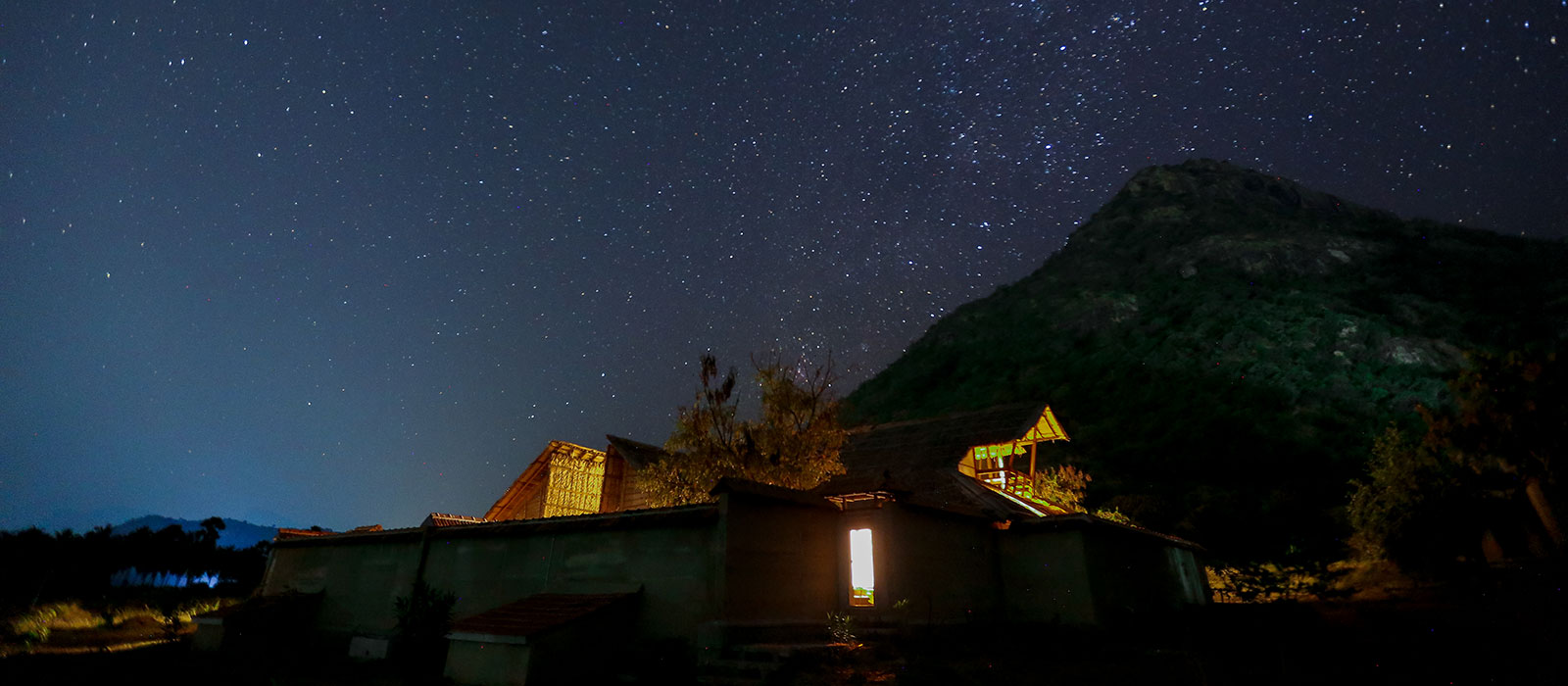
- Stargazing & Bonfire Nights – Away from city lights, the night sky here is magical, making it perfect for stargazing.
- Private Dining – Enjoy gourmet meals made with fresh, local ingredients, served in the privacy of your villa or under the open sky.
How to Reach SpiceTree Chinnar from Coimbatore
- By Car: A comfortable 2-hour drive via NH83 will take you directly to the resort.
Conclusion: A Refreshing Escape Awaits
If you’re in Coimbatore and searching for a quiet, luxurious escape close to nature, SpiceTree Chinnar is the perfect choice. Just a short drive away, this hidden gem offers everything you need for a peaceful weekend retreat—seclusion, luxury, adventure, and relaxation.
So, the next time you feel overwhelmed by city life, pack your bags and head to SpiceTree Chinnar for an unforgettable getaway.
Every region has its myths and stories that offer a glimpse into the soul of the land, and the Anamalai Hills are no exception. From sacred hills and magical creatures to tales of love and devotion, the Anamalai Hills are filled with legends and folktales that have been passed down through generations. In this post, we explore some of the most cherished stories of the region, each one reflecting the deep bond between the people and their natural surroundings. To explore more about the history, culture, and significance of the Anamalai Hills, make sure to check out our other posts on the Ancient History, Colonial Influence, Tribal Culture, and the Natural and Cultural Significance of this magnificent region.
5.1 The Tale of Karimalai, the Black Hill
One of the most famous legends associated with the Anamalai Hills is the story of Karimalai, or the “Black Hill.” This tale is not only a favorite among the local tribes but also revered by Hindu pilgrims who visit the hills to pay their respects to the ancient deities believed to dwell there.
The story begins long ago when the Anamalai region was untouched by human hands, and the gods roamed freely in the forests and mountains. It is said that the hills were ruled by a powerful god named Karimalai Aandavar, or “Lord of the Black Hills.” Karimalai Aandavar was a mighty protector of the forest, ensuring that no harm came to the trees, animals, or rivers.
Legend has it that Karimalai Aandavar had the ability to transform into a mighty elephant, as elephants were considered sacred in the Anamalai region. One day, a great drought struck the hills, causing rivers to dry up and the animals to suffer. The god, in his elephant form, traveled across the mountains to seek help from other deities, but even they could not restore the water.
Moved by the suffering of the people and the animals, Karimalai Aandavar decided to sacrifice himself for the land. He climbed to the highest peak of the Anamalai Hills and, in a final act of devotion, disappeared into the earth, turning the peak into a dark, sacred hill—the Karimalai Hill. From that day on, the rains returned, the rivers flowed again, and the land prospered. It is said that Karimalai Aandavar continues to protect the hills in spirit, and even today, offerings are made to honor his sacrifice.
Pilgrims who visit Karimalai Hill often leave small clay elephants as tokens of gratitude, believing that the spirit of the god still watches over the forests and ensures balance in nature.
Another popular folktale is the Curse of the Lion-tailed Macaque, a tale that explains why the rare and endangered lion-tailed macaque is treated with such reverence in the region.
According to tribal legend, there was once a mischievous young prince who lived in the hills. He was known for his arrogance and cruelty toward the animals of the forest. One day, he decided to hunt a group of lion-tailed macaques for sport. Ignoring the warnings of the village elders, he chased the macaques deep into the forest, where he came face to face with the Spirit of the Forest, who appeared in the form of a giant lion-tailed macaque.
Angered by the prince’s cruelty, the Spirit placed a curse upon him, transforming the prince into one of the very macaques he had sought to kill. The prince, now in the form of a macaque, was forced to live among the animals he had once hunted, learning their ways and suffering the hardships they faced.
Over time, the prince grew to understand the importance of the macaques and their role in maintaining the balance of the forest. He repented for his actions and begged the Spirit of the Forest to lift the curse. The Spirit, pleased with the prince’s transformation of character, agreed but with one condition—the prince and his descendants must protect the macaques for all time.
From that day forward, the local people vowed never to harm the lion-tailed macaque, believing that the creatures were sacred and carried the spirit of the prince. Even today, the lion-tailed macaque is regarded with great respect in the Anamalai Hills, and many locals believe that harming them will bring misfortune.
Another ancient tale from the Anamalai Hills speaks of the White Elephant, a mystical creature believed to have the power to control the rain. The story is set during a time when the region was plagued by severe drought, and the people of the hills were desperate for water.
According to the legend, a group of tribal elders prayed to the rain gods for relief, but their prayers went unanswered. As the situation grew worse, a wise old woman from the Malasar tribe claimed to have seen a vision of a white elephant in her dreams. She told the villagers that the white elephant was a celestial being, and if they could find it and offer their deepest prayers, the rains would return.
The villagers set off on a long and perilous journey through the dense forests and high mountains, searching for the white elephant. After days of searching, they finally found the creature at the top of a sacred hill. The white elephant, moved by their devotion and desperation, agreed to help. It raised its trunk to the sky, and almost immediately, rain began to pour, ending the drought and bringing new life to the land.
The legend of the White Elephant is still told by tribal communities during times of drought, and it is said that if the people of the Anamalai Hills ever need rain, they must call upon the spirit of the white elephant with songs and offerings. Some tribes even perform special rain dances in honor of this tale, hoping to invoke the power of the mystical creature to ensure a good harvest season.
For the tribes of the Anamalai Hills, the forest is more than just a home—it is a living, breathing entity filled with spirits and deities that watch over both people and animals. Many of the legends passed down through the generations involve these forest spirits, who are believed to guide and protect the inhabitants of the hills.
One common tale tells of the Vanadevata, or forest deities, who take the form of animals, trees, or even the wind. These spirits are known to test the character of travelers passing through the forest. Those who respect the environment and treat the forest with kindness are rewarded with safe passage and good fortune. However, those who harm the forest or act with greed and disrespect are met with misfortune, often losing their way in the dense jungle or encountering wild animals.
One popular folktale involves a young hunter who entered the forest in search of game, disregarding the warnings of his elders about the Vanadevata. In his arrogance, he killed several animals without offering prayers or thanks to the forest spirits. As he ventured deeper into the woods, he became lost, and a thick fog descended upon him. No matter how far he walked, he could not find his way out. It was only when he stopped to apologize to the Vanadevata, offering his last meal as a tribute, that the fog lifted, and he was able to return to his village.
Even today, many tribal communities perform rituals before entering the forest, asking the spirits for permission and safe passage. The belief in the Vanadevata reinforces the respect and reverence that the people of the Anamalai Hills hold for their natural surroundings.
Despite the sweeping changes brought by colonialism and modernization, many of the indigenous tribes in the Anamalai Hills, such as the Pulayar, Malasar, Muduvan, and Kadar, continue to live in the region, preserving much of their ancient way of life. However, their existence has become a delicate balance between tradition and adaptation to the modern world.
Today, these tribes reside in small, scattered hamlets across the dense forests and foothills of the Anamalai ranges. While they have retained their ancestral knowledge of the land, many aspects of their lives have changed. Increased interaction with the outside world, government initiatives, and tourism have brought modern education, healthcare, and employment opportunities, but these influences have also introduced challenges.
Some tribes still practice shifting cultivation (also known as “slash-and-burn agriculture”) and grow crops like millet, tapioca, and bananas, though the extent of their traditional farming methods has reduced due to restrictions on forest land use. Livelihoods have expanded beyond subsistence agriculture to include labor in nearby tea estates, handicraft production, and small-scale trade with nearby towns. Many tribes also depend on the forest for collecting honey, medicinal herbs, and other forest products, a tradition that connects them to their roots.
Despite the pressures of modernity, the tribes of the Anamalai Hills maintain a deep connection to nature, with their beliefs, customs, and daily practices still revolving around the rhythms of the forest. Their animistic religion—the belief that natural elements like rivers, mountains, and animals have spiritual significance—continues to influence their spiritual practices and ceremonies. This bond with nature has helped preserve the ecological balance of the region for centuries, and their traditional ecological knowledge remains invaluable to modern conservation efforts.
While many aspects of tribal life have evolved, the communities have worked hard to keep their cultural identity alive. Traditional practices such as folk music, dance, and storytelling are still prevalent, though now often shared with visitors and tourists, providing a glimpse into their rich heritage.
One of the most vibrant expressions of tribal culture is their dance rituals. Each tribe has its own distinct dance forms, performed during religious ceremonies, seasonal festivals, and life-cycle events like weddings or harvest celebrations. For example, the Muduvan tribe is known for its energetic dances that mimic animal movements, performed to the beat of traditional drums and accompanied by chants. These dances serve not just as entertainment but as a way of honoring their gods and ensuring harmony with nature.
Storytelling is another crucial aspect of preserving their heritage. The tribal elders continue to narrate folktales, myths, and moral stories, which are passed down orally from generation to generation. These stories often contain lessons about respecting the environment, the balance between humans and animals, and the consequences of breaking that harmony. Some tribes even conduct storytelling sessions around the evening fire, keeping alive the oral traditions that have sustained their culture for centuries.
In the face of modern influences, craftsmanship remains an essential part of the tribes’ identity. The Malasar and Pulayar tribes, for instance, are known for their basket-weaving and wood-carving skills, which have been passed down through generations. These handicrafts are often made using materials sourced from the forest, like bamboo, wild grasses, and wood. Though these items were once crafted for daily use, today they are often sold to tourists, creating a source of income for the tribes while keeping their ancient skills relevant.
In recent decades, tourism has begun to play a significant role in the lives of the tribal communities in the Anamalai Hills. With the increasing popularity of eco-tourism and wildlife safaris, tourists are eager to experience both the natural beauty of the region and the rich cultural heritage of its people. Many travelers visit the tribal villages to witness their traditional lifestyle, arts, and crafts.
While this interaction has brought economic opportunities for the tribes, such as selling handicrafts, guiding tours, or performing dances for visitors, it has also created challenges. The growing presence of tourism has led to concerns about the commercialization of their culture. Some tribal leaders worry that certain rituals and practices, once sacred, are being transformed into mere performances for outsiders. Maintaining the authenticity of their cultural heritage while benefiting from tourism is a delicate balancing act that the communities are still navigating.
At the same time, the influx of modern society into these once-isolated regions has impacted the tribes’ youth. Many younger members of these communities are exposed to modern education and urban lifestyles, leading some to migrate to towns and cities for better opportunities. While this has created economic mobility, it has also raised concerns about the erosion of traditional knowledge. To counter this, several NGOs and local organizations have initiated cultural preservation programs, encouraging the younger generation to reconnect with their roots and learn about their heritage.
One of the most significant contributions of the tribal communities in the Anamalai Hills is their traditional ecological knowledge (TEK), which has been passed down for generations. This knowledge, based on centuries of living in close proximity to the forest, is invaluable in modern conservation efforts. The tribes understand the delicate balance of the ecosystem and have developed practices that help sustain it.
For instance, the Muduvan tribe has long practiced sustainable farming techniques that do not harm the forest. Their understanding of the local flora and fauna is unparalleled, and they are able to identify plants with medicinal properties that are still used in Ayurvedic treatments today. The Pulayar and Kadar tribes have an intimate knowledge of the behavior of animals, particularly elephants and tigers, which has been crucial in wildlife conservation projects.
In recent years, conservation organizations have recognized the importance of involving tribal communities in wildlife protection efforts. Many local tribes have become forest guards and guides, helping monitor animal populations, prevent poaching, and protect endangered species like the tiger and elephant. These efforts have not only contributed to the success of conservation projects but have also empowered the tribal communities, providing them with sustainable employment opportunities that align with their traditional lifestyles.
In an effort to preserve their heritage, many tribal communities have begun to revive traditional festivals and practices that had been overshadowed by modern influences. These festivals are a way to reconnect with their cultural roots and pass on their customs to the younger generation. Events such as the Harvest Festival are celebrated with elaborate rituals, dance performances, and communal feasts, honoring the forest gods and giving thanks for the bounty of nature.
Tribal festivals also serve as a platform for raising cultural awareness among the broader public, including tourists. Cultural festivals organized in collaboration with NGOs and local governments have become an important means of showcasing tribal traditions. Visitors are invited to experience authentic tribal ceremonies, purchase handicrafts, and learn about the tribes’ symbiotic relationship with the land.
Moreover, these festivals have become a rallying point for community pride, as they allow the tribes to assert their identity in a rapidly changing world. By reviving these traditions, the tribes are not only preserving their cultural heritage but also reinforcing their role as custodians of the Anamalai Hills’ natural and cultural landscape.
The tribal communities of the Anamalai Hills continue to play a vital role in preserving the region’s cultural and ecological heritage. Though modern influences have brought both opportunities and challenges, the tribes have found ways to adapt while maintaining their ancient traditions. Their intimate connection with nature and commitment to sustainable living offer valuable lessons for the world, as they continue to safeguard the rich biodiversity and cultural legacy of the Anamalai Hills.